
Post Author

Emily Blevins
Communications Director
RALEIGH, N.C. — North Carolina ranks 32nd in the country for child well-being, according to the 2026 KIDS COUNT® Data Book, a 50-state report of recent data developed by the Annie E. Casey Foundation analyzing how kids are faring nationwide. Improvements in economic well-being and family and community led to North Carolina’s climb from 34th to 32nd when comparing data from 2019 to the most recent data from 2024. But the data shows that North Carolina can do more to meet unmet needs and build on positive trends.
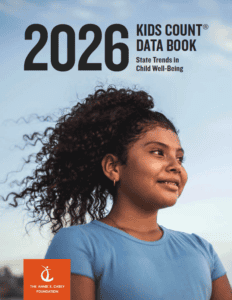 For the first time this year, states receive a comprehensive score (from 0 to 1,000) in the Data Book, not just a ranking. The scores track 16 indicators in four domains — economic well-being, education, health, and family and community factors — over a five-year period from 2019 to 2024. The new scoring system shows whether policies and public investment are actually improving children’s lives, not merely how states compare to each other. North Carolina received an overall score of 537, slightly below the national score of 547, with the state’s highest scores coming in the family and community and economic well-being domains.
On the positive side in North Carolina, the latest data shows a decline in the teen birth rate (14 births per 1000 in 2024; 18 births per 1000 in 2019), the percentage of children living in high-poverty areas (6% in 2024; 8% in 2019), and the percentage of children living in single-parent families (35% in 2024; 37% in 2019). But along with those improvements, the data also shows worsening housing affordability, declining literacy and math proficiency rates, and a decline in participation in early learning programming.
“We are glad to be moving up in the rankings, but we still have work to do,” said Erica Palmer Smith, Executive Director of NC Child, North Carolina’s member of the Casey Foundation’s KIDS COUNT network. “In the latest data, the percentage of babies born in North Carolina at a low birth weight is 9.2 percent, which ranks 38th in the country, and nearly one in five of our children live in poverty. We can do better and we should. We believe that every child should have the opportunity to reach their full potential.”
In its 37th year of publication, the KIDS COUNT® Data Book provides reliable statewide numbers to help leaders see where progress is being made, where greater support is needed, and which strategies are making a difference. NC Child encourages lawmakers and officials in North Carolina to use this detailed information to unite across party lines and respond with initiatives that invest in young people. By offering a local road map, the Data Book equips policymakers, advocates and communities with the information they need to make decisions that help kids and young people thrive.
“We know what we need to do to further improve these outcomes,” said Palmer Smith. “By addressing issues like youth mental health, food insecurity, education, and the need to invest in high quality early childhood we can make a difference for our children right now, starting today.”
###
ABOUT NC CHILD
NC Child is a 501(c)(3) nonprofit organization that advocates for public policies that improve the lives of all North Carolina children. As the state’s only multi-issue child advocacy organization, NC Child’s work addresses policies that affect the whole child, including health and well-being, early childhood education, and family economic security. NC Child is also a leading source of state-level research and data on the issues affecting children and families, and the organization serves as a trusted and reliable source for policymakers and other child advocates across the state. For more information, visit ncchild.org.
RELEASE INFORMATION
The 2026 KIDS COUNT Data Book will be available at www.aecf.org/databook. Journalists interested in creating maps, graphs and rankings in stories about the Data Book can use the KIDS COUNT Data Center at datacenter.aecf.org.
ABOUT THE ANNIE E. CASEY FOUNDATION
The Annie E. Casey Foundation creates a brighter future for the nation’s young people by developing solutions to strengthen families, build paths to economic opportunity and transform struggling communities into safer and healthier places to live, work and grow. For more information, visit www.aecf.org. KIDS COUNT is a registered trademark of the Annie E. Casey Foundation.